 |
 |
 |
Motorcycle Helmet Reviews and Buying GuideFind motorcycle helmet advice targeted for the way YOU ride, as well as resources for online helmet reviews and shopping.HOP-Links In my opinion, the most important motorcycle accessory is the
Motorcycle Helmet
The fact is that most states require helmets, so we have to live with them anyway. This WiseGuy will wear a helmet whether laws require it or not. Ninety percent of the time, that helmet will be a full face helmet. In a hurry? You can use the HOP-Links above to jump directly to the section that focuses on YOUR favorite style of riding. NEW! Motorcycle Helmet Reviews
Page SportBikesSport bike riders have some of the most colorful and varied choices in motorcycle helmets. Your sport is technical, on the edge and fast. With high speed comes increased risk (just ask your insurance agent ;-). Maximum protection is essential. You don't just want a fast bike, you want a motorcycle helmet that looks fast too. The best choice here is a Full Face Helmet
Consider the ventilation system on a full face helmet. High quality helmets have close fitting shields and snug padding around the bottom to minimize wind noise. The tradeoff to that is that it promotes fogging. Manufacturers attempt to avoid this by installing breath deflectors at the top of the chin bar. The best ventilation systems incorporate air ducts in the styrofoam safety liner to pull hot air away from your scalp. If you can, get a face shield system that has a handy tool free design. Most of the mid to high end helmets have this feature. Examples of SportBike HelmetsHigh End:
Shoei RF-1000 Strife Helmet

Shoei RF-1000 Strife Helmet
Mid Range:
HJC CL-15 Mutant Helmet

HJC CL-15 Mutant Helmet
Entry Level:
KBC Tarmac Hammerhead Helmet

KBC Tarmac Hammerhead Helmet
At all price points in street helmets, look for closeouts
Touring and CommutingFor touring duty you need above all long lasting comfort in your motorcycle helmet. A full face design is not necessary, especially if you're sitting comfortably behind the screen of a Honda Gold Wing or Harley Electra Glide. Besides, that chinbar will be in the way when you get ready for a drink of your favorite beverage that's probably sitting in your cup holder. :D An open face
I might go either way in choosing a motorcycle helmet for commuting. If you're a hardcore commuter you'll be out in all kinds of weather and in that case a full face helmet is in order. The open face would make it practical to take in that cup of coffee on the way to work though. Daily wear demands comfort and no nonsense design in either case. There is an alternative to both the full face and open face motorcycle helmets. The modular or flip-up helmet combines the safety of a full face helmet and the convenience of an open face. Modular helmets are not eligible for Snell certification, so no matter what you pay you'll be getting DOT certification only. Examples of Touring Motorcycle HelmetsModular:
HJC Sy-Max II Modular Helmet

Open Face:
HJC AC-3 Carbon Helmet

HJC AC-3 Carbon Helmet
Cruisers and CustomsThere's definitely nothing wrong with wearing any of the previously discussed motorcycle helmet designs while riding your cruiser or custom styled bike. As a matter of fact I do it all the time. I don't however, claim to exhibit the most cutting edge style either. :0 For cruising, most of you will be looking for a minimal lid, just enough to get by the sharp eye of Mr. State Trooper. A lot of cruisers will resort to wearing a novelty or beanie helmets, but please don't. My brain is worth more than $20 to me, is yours? Cruiser helmets give up protection for the ears and cheeks and represent the minimum protection in a motorcycle helmet. Some do come with a zip off neck curtain to cut down on wind noise and help keep your ears warm. Examples of Cruiser Motorcycle HelmetsThe smallest, lowest profile helmet to meet DOT certifications that I know of
is the
Skid Lid Original Helmet

Skid Lid Original Helmet with Flames
Dirt BikesDistinctive styling and single purpose design sets dirt bike helmets apart from the rest. Instead of having a face shield, these lids usually have a place for goggle straps. Almost all have a baseball cap type visor. Colors and graphics are almost unlimited in Motocross helmets. Look for replicas of your favorite racer's helmet, but expect to pay more for the trick look. Examples of Dirt Bike HelmetsHigh End: -
Arai VX-Pro III Milsap Replica Helmet

Arai VX-Pro III Milsap Replica Helmet
Mid Range: - Get great bang for the buck in the mid range in dirt bike
helmets. Fox Racing doesn't cut corners on their gear and the helmets are no
exception. They have a very affordable and killer looking line called the V-1.
Fox Racing V-1 Razor Helmet

Fox Racing V-1 Razor Helmet Motorcycle Helmet FactsThe following information applies to all motorcycle helmet styles. ConstructionA motorcycle helmet consists of four primary parts:
Helmet shells are primarily manufactured in one of two materials: fiberglass or injection molded plastic. Helmet manufacturers are constantly working to develop less expensive, stronger, and lighter materials for helmet shell construction. The injection molded plastic helmet generally is the lightest and least expensive available today. It may also have a shorter life expectancy. Its chemical composition can be changed if it is painted or decals are applied to its surface. Damage can occur if it is stored near gasoline, cleaning fluids, or exhaust fumes. The user should read carefully any and all information supplied with these helmets. Fiberglass helmets can be more expensive than injected molded helmets, especially if the fiberglass layers are hand laminated. Fiberglass helmets delaminate on impact to absorb shock. You can paint them or apply decals without damage. However, because they are built to absorb shock, they can also break or crack if severely impacted in an accident, a fall or even if dropped sharply onto a hard surface. 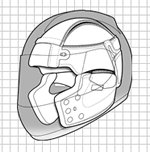 The helmet liner is made of expanded polystyrene foam (or "Styrofoam"). This is an important part of the motorcycle helmet, as this polystyrene liner is non-resilient and evenly spreads the impact in an accident. The more impact energy that can be absorbed by the liner, the less there is of that shock energy to reach the head and do damage. Motorcycle Helmet Safety StandardsYour motorcycle helmet should comply with the standards from one or more of these agencies:
Each organization has established rigid procedures to evaluate:
It's easy to get bored reading the specifics about each organization and how their standards are developed, but if you really want to, I've provided links above. Department of Transportation (DOT) certification is mandatory. Since 1980 all adult-sized helmets must meet the DOT standard. Snell Memorial Foundation. The use of the Snell certification is voluntary. Snell has been testing helmets since the 1950's. Does your helmet have to be Snell Certified to be really safe? No. Take this perspective: There is a much larger difference between a novelty helmet and a DOT certified helmet than there is between a DOT certified helmet and a Snell Certified helmet. Visit the Snell website to get more information. American National Standards Institute (ANSI) The ANSI requirement is a voluntary standard developed by a committee or representatives from consumer groups, helmet manufacturers, testing organizations and the military. Getting the Right Size HelmetYour motorcycle helmet fit is critical to the comfort and enjoyment of your helmet. It also plays a critical role in the performance of your helmet in the event of a collision. Never wear a motorcycle helmet without making sure you have a proper snug fit (not too tight, and not too loose - just right!) 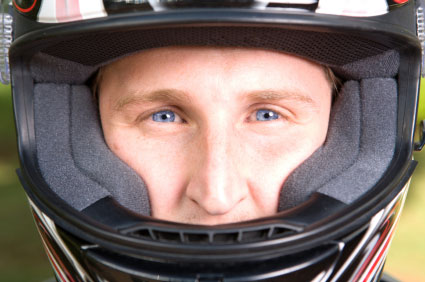 This image shows a properly fitted motorcycle helmet. There are several methods and tricks to size a helmet. This is the recommended method:
Congratulations! If you passed these tests, you now have a properly fitting helmet that will maximize safety and minimize wind noise as well! If you enjoyed this motorcycle helmet article, be sure you read all the motorcycle accessories articles at Motorcycle-Accessories-WiseGuy.com! back to topMore ResourcesCheck out my favorite online helmet store
Always shop around for selection and price. this store
Don't buy before checking out the sometimes crazy helmet deals
More WiseGuy Helmet ContentIs it possible to find Cheap Motorcycle Helmets without compromising your safety? Find Out! Click Here to Discover four great places to find Closeout Motorcycle Helmet deals. Unique Motorcycle Helmets have a story to tell. What's yours? See actual photos of KBC Helmet Visors so you can tell what you're buying. Or Learn more about KBC Helmets. Three reasons you should consider Fulmer Helmets as your next lid. Learn more about your favorite motorcycle helmet brands. |
UpdatesFrom my readers |
|
Start HereApparelAccessoriesFurther ReadingEnjoy This Site? Then why not use the button below, to add me to your favorite bookmarking service? 
|
||
|
Helping You Get The Most For Your Motorcycle Accessories Dollar since 2003! Copyright� 2003-2009 Motorcycle-Accessories-WiseGuy.com |
||
